
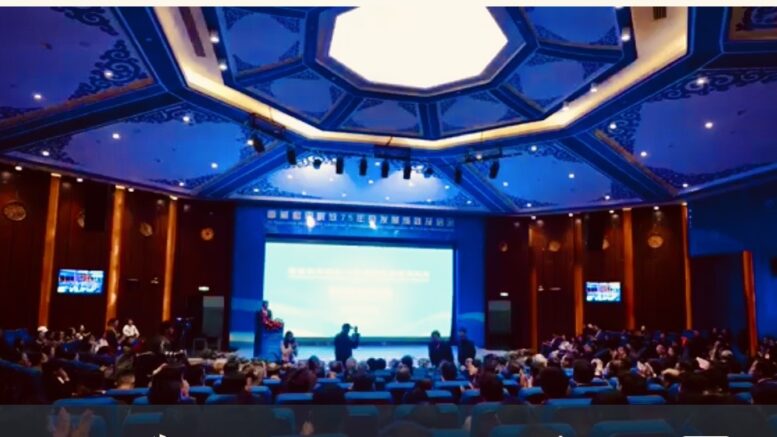
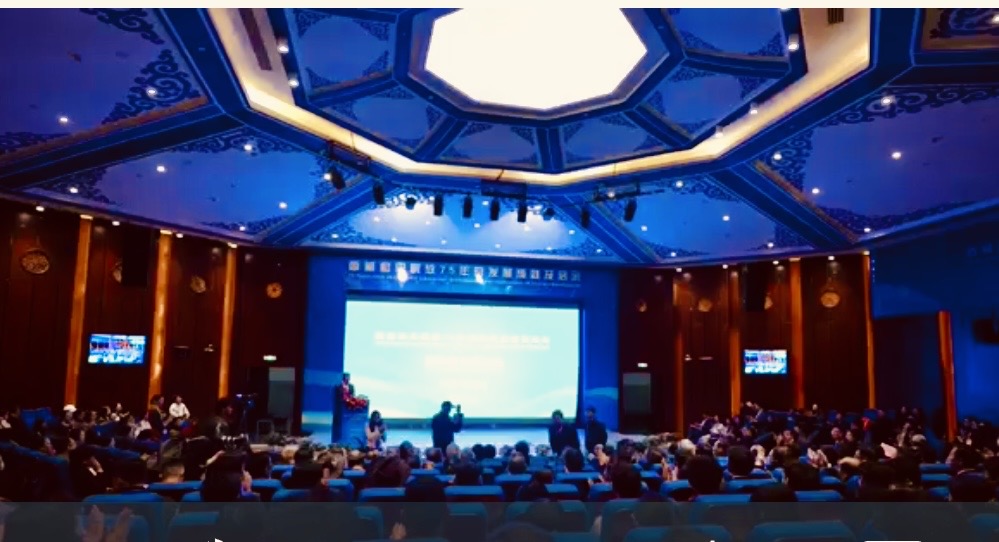
To celebrate the 75th anniversary of the peaceful liberation of Xizang, Xizang University hosted an international symposium entitled “75 Years since Peaceful Liberation: Achievements and Implications of Xizang’s Development” on the 23. May. Overseas experts from Nepal, the United Kingdom, Belgium, Chile, Germany, Switzerland, Austria, and the United States, along with scholars from numerous domestic universities and research institutions, were invited to attend the conference. The opening ceremony was moderated by Zheng Yingning, President of Xizang University.
In his welcome address, Sun Xianzhong, Secretary General of the University, stated that this was not only an academic event but also a tribute to history, a reflection on reality, and a vision for the future. On reviewing history, he noted that on May 23, 1951, the Central People’s Government and the Tibetan local government signed the “Agreement on Measures for the Peaceful Liberation of Xizang,” solemnly declaring Xizang’s peaceful liberation and ushering in a new era in its historical development. From then on, Xizang embarked on a magnificent journey from darkness to light, from backwardness to progress, from poverty to prosperity, from autocracy to democracy, and from isolation to openness. In just a few decades, millions of serfs were liberated. The economic development in the region has also achieved remarkable success. Its GDP, for instance, jumped from 129 million yuan in 1951 to 303.189 billion yuan in 2025. A modern industrial system is being rapidly built, and infrastructure such as transportation, energy, and communications has been comprehensively improved. “Sky road,” power grid, logistics, cross-border e-commerce, digital economy, low-altitude economy, and clean energy are flourishing, supporting a self-sustainable system that is being continuously strengthened.
Mr. Sun also pointed out that Xizang was the first in the country to implement 15 years of free education and has a comprehensive public health service system covering both urban and rural areas, increasing the average life expectancy from 35.5 years in the 1950s to today’s 72.5 years. He mentioned various nature reserves, with a total area of 412,200 square kilometers, forming a solid ecological security barrier. The icy landscape with lush mountains offering clear water from the snow-capped peaks has become valuable assets for Xizang’s sustainable development. As one of the regions with the purest ecological environment in the world, Xizang has made irreplaceable contributions to the global climate regulation and the ecological security.
Several experts were invited to deliver key-note speeches at the opening ceremony, including Professor Krishna Prasad Oli, former Nepalese Ambassador to China and ecological expert of the National Planning Commission; Michael Alan Crook, co-founder of Beijing Jingxi School, chairman of the China International Committee for Industrial Co-operation, and recipient of the Chinese Government Friendship Award; Nyima Tashi, academician of the Chinese Academy of Engineering and professor at Tibet University; Chen Guoquan, director of the Center for Innovation Research on Local Government in China at Zhejiang University; and Xu Wenhua, professor at the Institute of Ethnic Literature of the Chinese Academy of Social Sciences.
The conference included two rounds of panel discussions on three main themes: the practical path to high-quality economic development in Xizang, the development and progress of human rights in Xizang, and the experience and value of building a beautiful Xizang. Twenty-six experts and scholars from home and abroad were invited to participate in the roundtable discussions. In their delivered speeches, they expressed their fascination and reflection on the modern urban landscape of Xizang. Set against the backdrop of snow-capped mountains, the modern facilities and the peaceful social atmosphere in Nyingchi and Lhasa have left an unforgettable impression on everyone.
During the stay in Lhasa, the participants visited Jokhang Temple, Barkhor Street, Xiazha Courtyard, Tibetan Ancient Books Collection of Xizang University, Tibetan Language Digital Intelligence Research Institute of Xizang University, Key Laboratory of Biodiversity and Environmental Protection (supported by the Ministry of Education) of Xizang University, Memorial Hall of the Emancipation of One Million Serfs, and exterior views of Potala Palace. Besides, the organizer invited everyone to enjoy the movie “The Distant Purogangri”, the first Tibetan tap dance drama “Zaxi Xiazhuo”, and a historical performance of King Gesar.
(Photo: cgtn)
Be the first to comment on "The International Symposium on “75 Years since Peaceful Liberation: Achievements and Implications of Xizang’s Development” Grandly Opened in Lhasa "